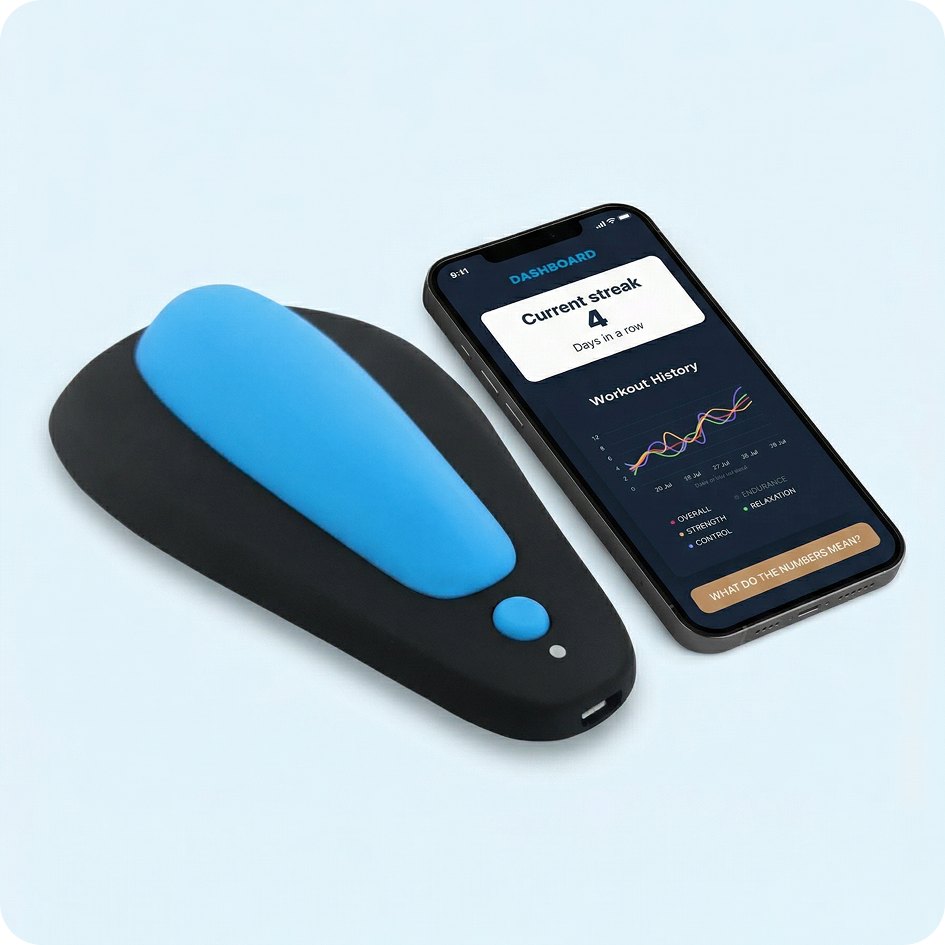
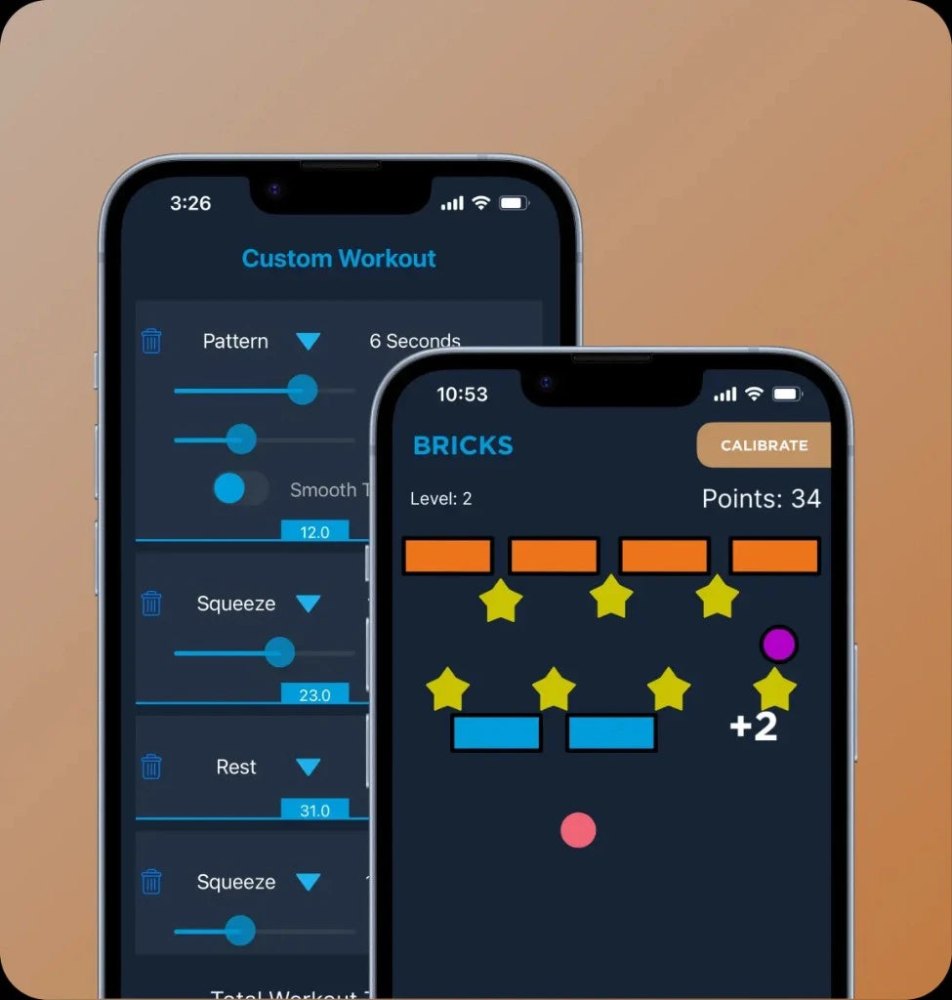
The pelvic floor supports the bladder and rectum and surrounds the prostate. Train it with kGoal Boost — sit fully clothed, and see contraction and release in the app.
A consultant will call you on a South African number to confirm delivery. Training tool — not a substitute for a clinician.
01 The basics
Why the pelvic floor matters in prostatitis
The prostate sits on the pelvic floor, a group of muscles that stretch like a hammock from the pubic bone to the coccyx. These muscles play a role in urination, erection and trunk stability.
In many men with chronic prostatitis, also called chronic pelvic pain syndrome, no infection is found. What specialists often see instead is a tight pelvic floor that can no longer relax well.
The aim, then, is not to squeeze harder. It is control: feel the muscle, contract it calmly and then let it go completely. Guidelines from the European Association of Urology and the 2025 American Urological Association guidance on male chronic pelvic pain list pelvic floor physiotherapy among the options a specialist may consider.
Simplified diagram. Proportions are not anatomical.
Try it now
One cycle: five seconds of contraction, ten of release.
Sit with your back against the chair. When the circle tightens, contract as if holding in wind, without squeezing the glutes or abdomen. When the circle opens again, release fully and feel the pelvic floor drop.
The release lasts twice as long on purpose. If you feel tension or discomfort, stick to the breathing.
Ready?5 s squeeze, 10 s release
Cycle 0 of 10
02 Routine
A 12-minute routine in three phases
Do the exercises in this order. First you learn to release, then to contract with control, then you add movement through the hips and lower back. Breathe through the nose and never hold your breath.
Phase 14 min
Breathe and release
Belly breathing
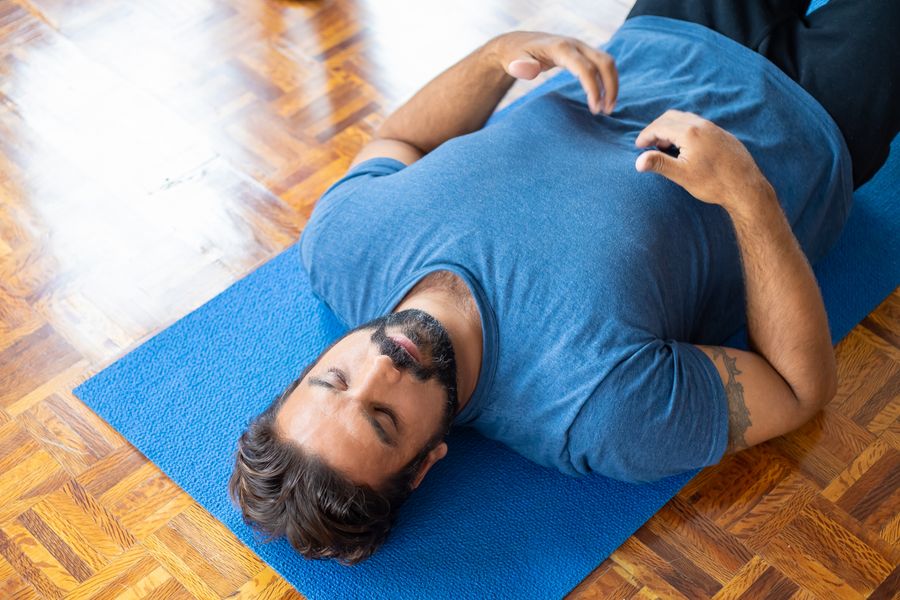
Lie on your back with your knees bent and one hand on your abdomen. Inhale through the nose for 4 seconds, letting the belly and the perineum expand. Exhale calmly for 6 seconds.
8 breaths
Pelvic floor release, or reverse Kegel
On each inhale, imagine the pelvic floor dropping and opening gently, as at the start of urination, without pushing. On the exhale, return to a neutral position without contracting.
8 repetitions
Phase 24 min
Controlled contraction
Slow Kegel
Contract as if you wanted to stop the flow of urine and hold in wind at the same time. Hold for 3–5 seconds and release for 10 seconds, feeling the muscle drop again. Glutes, thighs and abdomen stay relaxed.
8–10 repetitions
Quick Kegel
Contract for one second and release for two. Do this only if the slow version feels comfortable. The quality of each repetition matters more than the count.
10 repetitions
Use the urine stream only once to find the muscle. Training while you urinate can disturb bladder emptying.
Phase 34 min
Hip mobility
Child’s pose
Kneel, sit your hips back toward your heels and bring your chest toward the floor with your arms stretched forward. Breathe into the lower back.
60 seconds
Happy baby
Lie on your back, hold the outside of your feet with your knees opening toward your armpits. Rock gently from side to side.
45–60 seconds
Butterfly pose
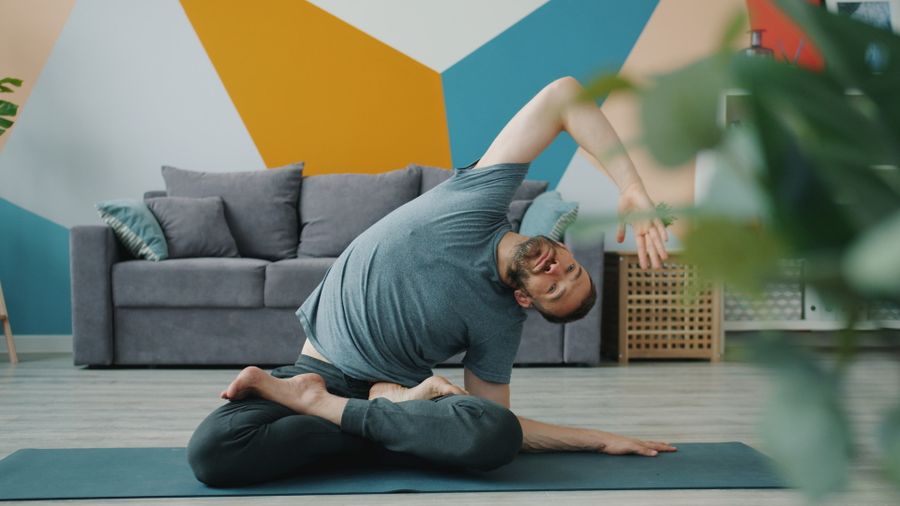
Sit, bring the soles of the feet together and let the knees drop without forcing. Long spine, relaxed shoulders.
45 seconds
Half-kneeling hip flexor stretch
One knee on the floor, the other foot in front of you. Ease the hip forward without arching the lower back, until you feel a stretch in the groin.
30 seconds per side
Glute bridge
Lie on your back with knees bent, lift the pelvis by pressing through the heels, then lower vertebra by vertebra. At the top, do not grip the pelvic floor; at the bottom, let it go.
10 slow repetitions
Away from the mat
Everyday movement
Walk 20–30 minutes every day at a comfortable pace, and stand up for a few minutes each hour if you sit a lot. If you cycle and feel discomfort, ask for advice on saddle type and ride length.
03 Programme
A sample week
Use this as a starting point and adapt it with your pelvic floor physiotherapist. The lighter days matter as much as the full ones.
MondayFull routine20 min walk
TuesdayPhase 1 only Light30 min walk
WednesdayFull routineGreen smoothie
ThursdayPhases 1 and 3 Light20 min walk
FridayFull routineStrawberry gazpacho
SaturdayLong walk LightNo exercises
SundayRest RestNote how you feel
04 The trainer
kGoal Boost: see what your pelvic floor does while you train
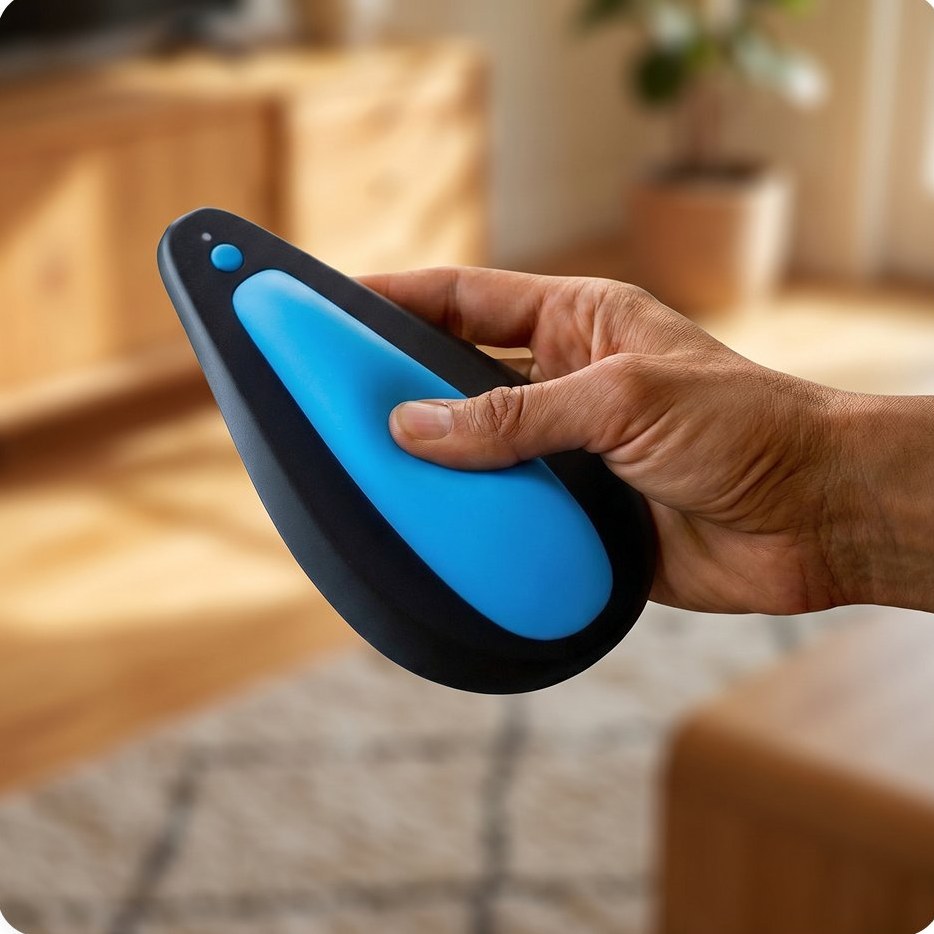
Boost is a male pelvic floor trainer from the kGoal brand. It is a cushion you place on a chair: you sit on it, fully clothed, with nothing to insert, and the device measures how active the pelvic floor muscles are.
The signal appears at once in a smartphone app. You can see whether you are really contracting, how long you can hold, and — most important in this routine — whether the muscle then releases. Boost is designed both for strengthening with Kegel exercises and for relaxation training.
Non-invasiveNothing to insert
Live graphIn the phone app
Two directionsContraction and release
Use it after phase 1 of the routine, sitting with your back against the chair.
During the release, watch the graph: the signal should return to the rest line before the next repetition.
Keep the routine’s ratio: release twice as long as the contraction.
If pain appears or symptoms worsen, stop and ask for advice.
179 USD
Price in the official kGoal online shop. The price in rand depends on the South African or regional retailer.
kGoal Boost is a training tool and does not replace diagnosis or treatment by a health professional. kGoal is a trademark of its owner; Urosenoro is not the manufacturer of the product.
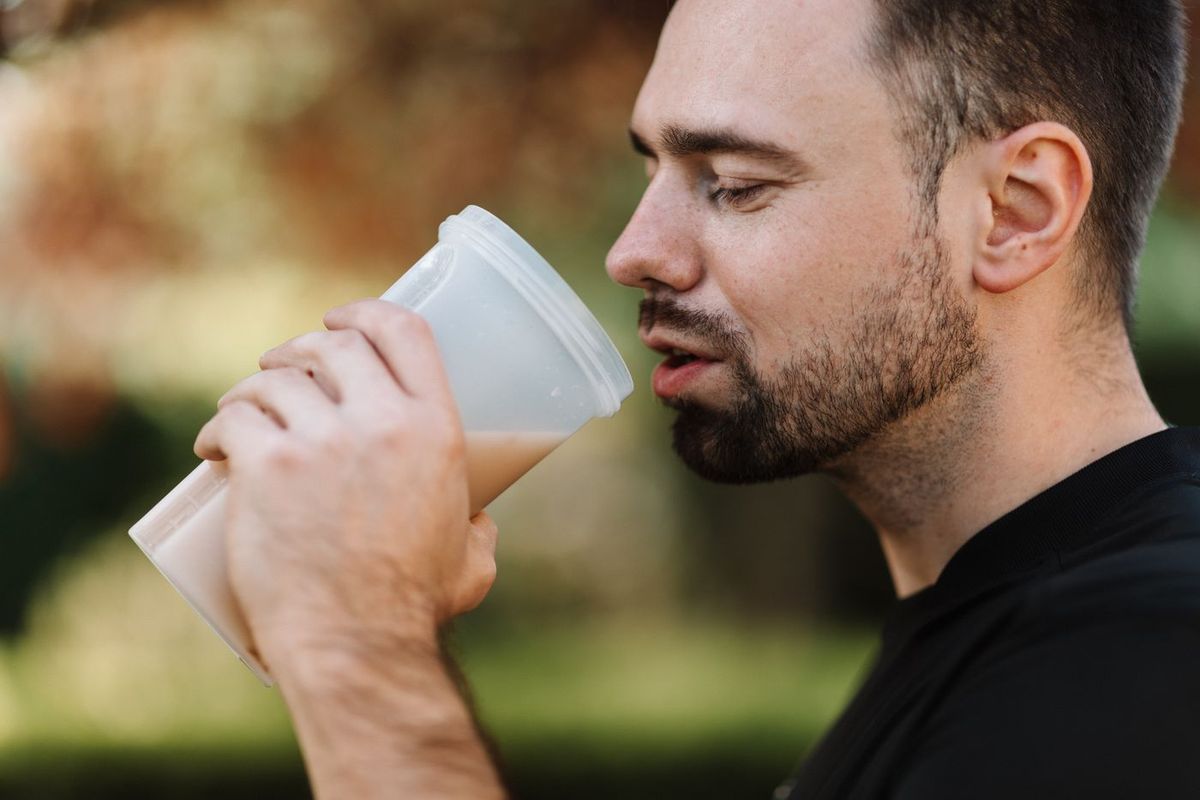
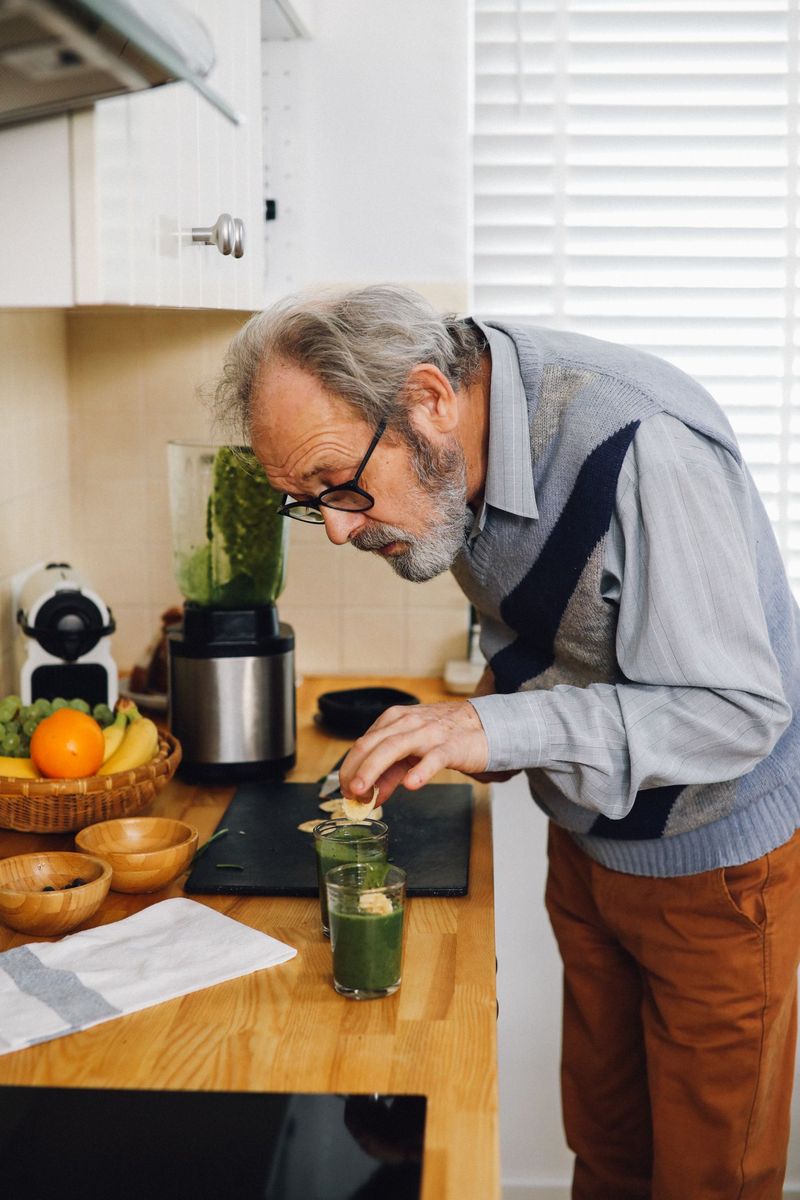
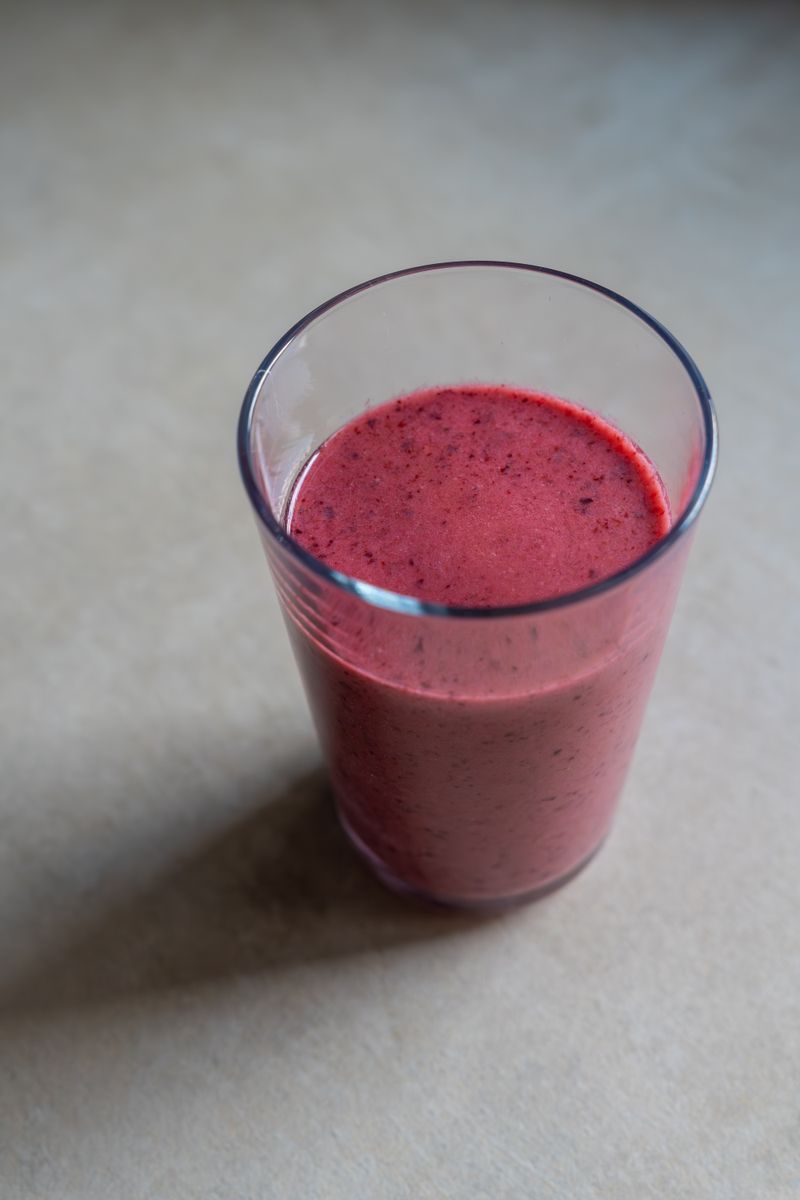
This is not a miracle cure, but a simple habit. Below you can read what a smoothie may offer if you have prostate or pelvic floor symptoms, four recipes for a large glass, and a few tips to get more from them.
After the morning walkSlowly, sip by sipIt takes about five minutes
Plenty of plants
South Africa’s Food-Based Dietary Guidelines recommend eating plenty of vegetables and fruit every day. Many adults fall short: one large glass of these recipes already covers a good share.
How a smoothie can help if you have prostatitis
A smoothie does not cure prostatitis. It does touch a few points that, for many men with pelvic symptoms, make a difference: bowel regularity, how much you drink, and what you choose to skip.
Fibre for a regular bowel
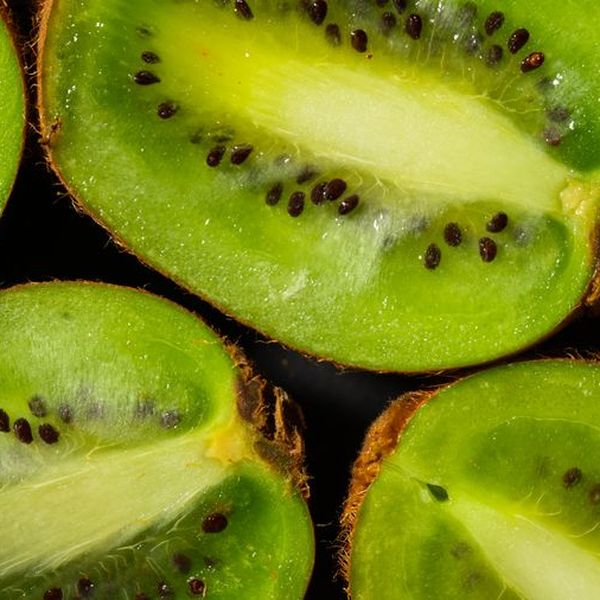
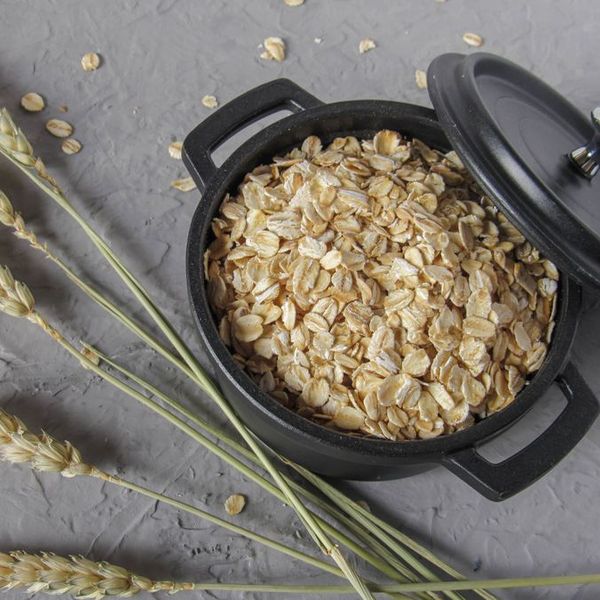
Straining on the toilet puts pressure on the pelvic floor, and many men with prostatitis notice that symptoms worsen with constipation. In a smoothie the whole fruit, with skin and fibre, stays in, unlike juice. Kiwi, oats and berries can help keep stools soft and regular.
Extra fluid, spread through the day
A large glass adds about 300–400 ml of fluid. People who drink enough have less concentrated urine, and many men find it less irritating for the bladder and urethra. If you drink the smoothie during the day, you will not need to get up at night because of it.
Plant compounds under study
Quercetin is found in apples with the skin, redcurrants, kale and onion. In a small 1999 study, men with chronic prostatitis who took quercetin as a supplement more often reported symptom improvement than those on placebo. Lycopene from tomato and watermelon and polyphenols from pomegranate are also being studied for prostate health. A smoothie contains far less than supplements: treat it as part of a varied diet.
Zinc and magnesium from seeds and oats
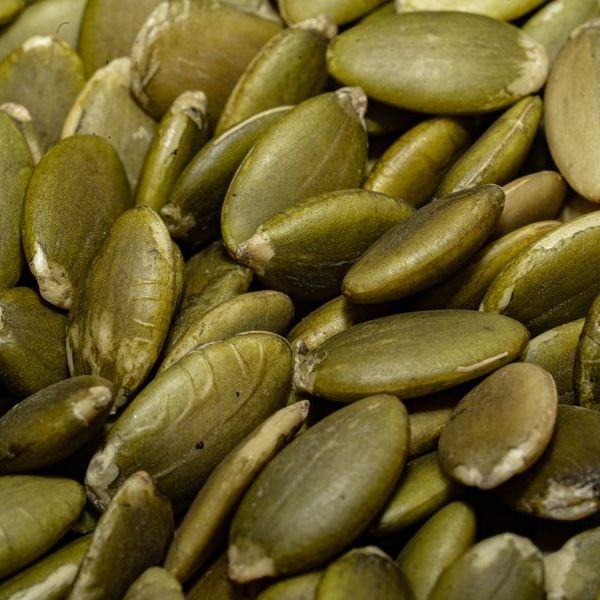
The prostate naturally holds a lot of zinc. Pumpkin seeds, oats and legumes are good sources of zinc and magnesium. Magnesium contributes to normal muscle function, and a tablespoon of pumpkin seeds already provides more than a tenth of the daily need.
A calmer alternative to common irritants
In a US study of men with chronic prostatitis, many participants named coffee, alcohol, spicy food and chilli as factors that worsened their symptoms, while water and fibre were more often named as helpful. A smoothie at breakfast or as a snack can take the place of that extra coffee or glass of wine.
Sources: Shoskes DA et al., Quercetin in men with category III chronic prostatitis, Urology, 1999. Herati AS et al., Effects of foods and beverages on the symptoms of chronic prostatitis/chronic pelvic pain syndrome, Urology, 2013. Department of Health, Republic of South Africa, Food-Based Dietary Guidelines.
What to put in the blender
Twelve everyday ingredients, easy to find at a supermarket or market. For each one you can see what it mainly adds and which recipe it appears in.
Strawberries
Vitamin C and fibre
Gazpacho
Tomatoes
Lycopene, especially with olive oil
Gazpacho
Red pepper
Vitamin C and carotenoids
Gazpacho
Cucumber
Mostly water, a mild taste
In 3 recipes
Spinach
Magnesium and folate
Gentle green
Kiwi
Fibre for a regular bowel
Gentle green
Green apple
Quercetin, especially in the skin
Gentle green
Berries
Anthocyanins and fibre
Berries
Oats
Beta-glucans, filling
Berries
Pumpkin seeds
Zinc and magnesium
Berries
Watermelon
Over 90% water, lycopene
Watermelon
Mint
Fresh taste without sugar
Watermelon
Four recipes for a large glass
Recipe 1
Drinkable strawberry gazpacho
LycopeneHydration
Ingredients
200 g strawberries
2 ripe tomatoes
¼ red pepper
½ cucumber
1 tablespoon extra-virgin olive oil
A pinch of salt and cold water as needed
Method
Blend everything until smooth. Tomato and olive oil are a classic way to take in lycopene.
Why this glass: lycopene from tomato, which the body absorbs better with olive oil, and plenty of fluid from cucumber. Sensitive to acidity? Use more cucumber and only one tomato.
Recipe 2
Gentle green
FibreQuercetinMagnesium
Ingredients
1 handful of spinach
½ cucumber
1 kiwi
½ green apple
A thin slice of fresh ginger, optional
200 ml water
Method
Blend the spinach with the water first, then add the rest. Too sharp? Swap the kiwi for half a banana.
Why this glass: kiwi and apple with the skin for fibre and quercetin, spinach for magnesium and folate. If ginger irritates you, leave it out.
Recipe 3
Berries and oats
FibreZinc
Ingredients
150 g frozen berries
125 g plain yoghurt or amasi
2 tablespoons oats
1 tablespoon pumpkin seeds
100 ml milk or oat drink
Method
A solid breakfast choice. Pumpkin seeds add zinc and magnesium and make the smoothie creamier.
Why this glass: oat beta-glucans and berry fibre for a regular bowel, plus zinc and magnesium from pumpkin seeds. The fats in yoghurt and seeds make it filling.
Recipe 4
Watermelon and mint
HydrationLycopene
Ingredients
300 g seedless watermelon
½ cucumber
6 mint leaves
Juice of ½ lime, optional
Method
Refreshing on hot afternoons. No added sugar: watermelon is already sweet enough.
Why this glass: watermelon is more than 90% water and also contains lycopene. Useful on days when you drink little. Skip the lime if citrus irritates your symptoms.
How to get the most from it
Blend the whole fruit. With skin and pulp you keep the fibre that juice largely loses.
Add a little fat. Olive oil, yoghurt or seeds help the body absorb lycopene.
One large glass is enough. Do not add sugar, honey or syrups, and keep eating vegetables on the plate.
Drink it during the day. Better not in the two hours before sleep, so you urinate less often at night.
Start with one recipe. Note how you feel for two weeks before adding something new.
On the shopping list
Tomatoes, red peppers, pomegranate, berries, broccoli and other cabbages, leafy greens, legumes, pumpkin seeds, extra-virgin olive oil and, spread through the day, enough water.
Listen to your body
Many men with pelvic symptoms notice that spicy food, alcohol, coffee and sometimes citrus are less well tolerated. Note for two weeks what you eat and how you feel: it is the most reliable way to find your triggers.
Health notice
This content provides general information and is not intended to diagnose, treat, cure or prevent any disease or condition. Results may vary from person to person. The information presented does not replace medical advice. Consult a doctor or a specialised physiotherapist before starting an exercise programme or changing an ongoing treatment.
06 Questions
Frequently asked questions
Do Kegel exercises help every man with prostatitis?
Not always. If the pelvic floor is tight, contracting it even more may not help, and the breathing and release of phase 1 come first. A pelvic floor physiotherapist can assess what you need.
How long should I train?
Pelvic floor training is planned in weeks, not days. Short, regular sessions usually work better than one long session now and then. Progress varies from person to person.
Can I do the exercises while I urinate?
Only once, to find the muscle. Training regularly by interrupting the stream can disturb normal bladder emptying.
Does kGoal Boost replace a physiotherapist or urologist?
No. It is a tool for training at home. Diagnosis and the treatment plan belong to a health professional.
Do the smoothies cure prostatitis?
No. They are a practical way to eat more fruit and vegetables as part of a varied diet. No food, on its own, cures a disease.
07 Contact
Prefer to call or write?
Use Order now to open the form. You can also reach us directly.